

FALLING AT FULL SPEED: Lindsey Vonn’s Harrowing Olympic Downhill Crash and the Road to Recovery

In what was meant to be a celebration of a storied career, Lindsey Vonn — one of the greatest alpine skiers in history — faced one of the darkest moments of her life at the 2026 Winter Olympics in Milan‑Cortina. What started as a bold attempt to challenge herself on the biggest stage ultimately ended in a terrifying crash that left her screaming in pain on the slope and airlifted from the scene, turning a global cheering moment into a harrowing test of survival and resilience.
A Legend Returns — and Faces the Ultimate Challenge

At 41 years old, Vonn was already defying expectations by competing at an age unheard of in the physically punishing sport of downhill skiing. Her career, highlighted by multiple World Cup titles and Olympic medals, had always been defined by fearlessness and a refusal to back down from a challenge.
But this Olympic event wasn’t just another race. It came on the heels of a torn anterior cruciate ligament (ACL) she had suffered just weeks earlier in a World Cup event. Undeterred, Vonn decided to race downhill at the Olympics wearing a knee brace — a decision that was met with admiration, concern, and debate over athlete safety.
Seconds That Changed Everything

In the women’s downhill event on February 8, Vonn’s run lasted barely 13 seconds. Almost immediately after the start, her ski caught a bump or gate, sending her off balance before she tumbled violently across the snow. Onlookers watched in stunned silence as the skiing legend writhed in pain — screams audible — after her skis and body twisted in a devastating fall.
Minutes passed while medical teams secured her to a gurney, and the severity of the scene quickly became clear: Vonn couldn’t walk off the mountain. Hours that were supposed to be filled with Olympic glory instead saw her airlifted by helicopter to a local hospital in Treviso, Italy, where an emergency team began trying to save her leg.
The Medical Battle: Injury Worse Than Expected
:max_bytes(150000):strip_icc():focal(749x0:751x2)/lindsey-vonn-surgery-022326-94ac487f20344846a9ccfab066ec9250.jpg)
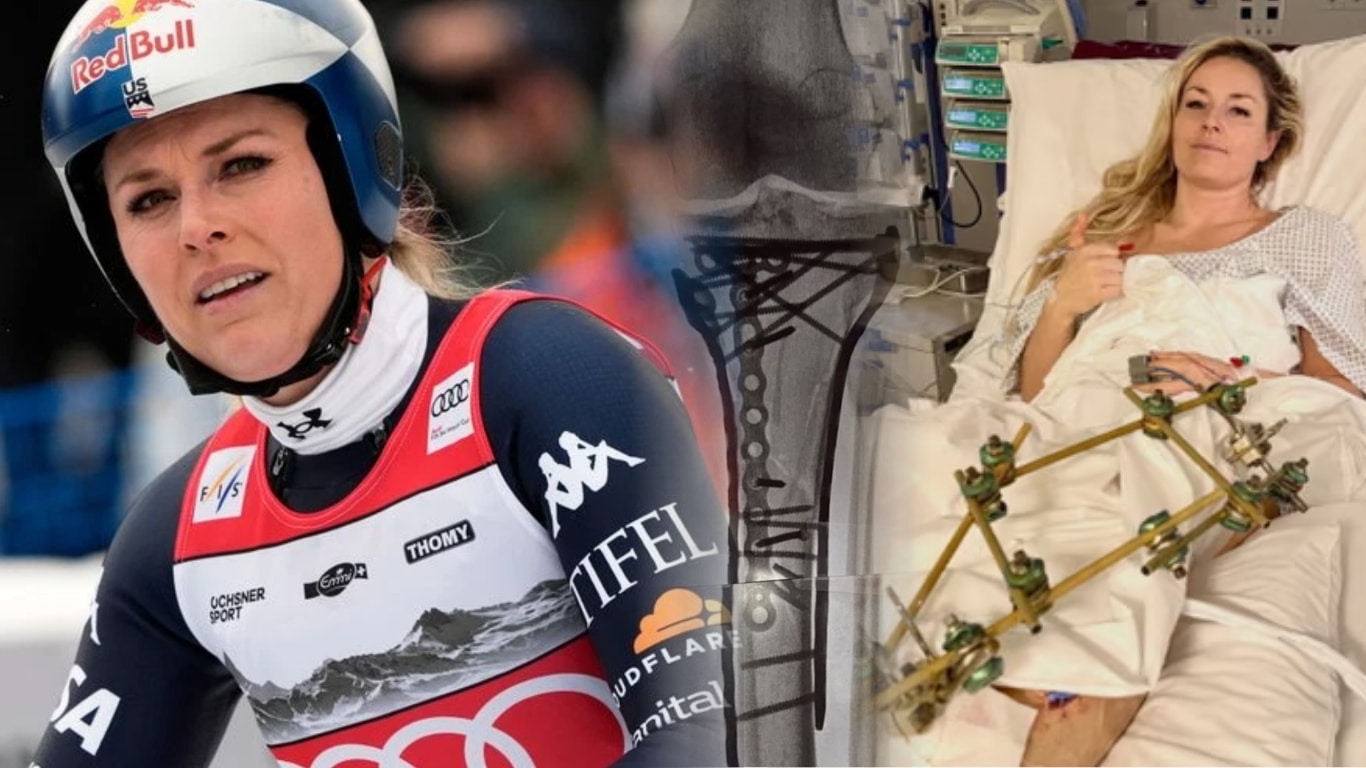
Initial scans revealed that Vonn had suffered a complex tibia fracture — a serious break in her lower left leg — on top of her already compromised knee. Soon after, she developed a dangerous condition known as compartment syndrome, where swelling within the muscle compartments can cut off circulation and permanently damage nerves, muscles, and tissue.
In Vonn’s case, the pressure was so intense that doctors feared they could lose her leg altogether. To prevent this, her surgeon performed an urgent fasciotomy, a procedure that involves cutting open the leg to relieve the pressure and restore blood flow. The surgery was successful, according to Vonn herself, and she publicly credited her medical team — especially Dr. Tom Hackett — for saving her leg.
Body and Mind: The Long Road Forward

In the weeks since the crash, Vonn has been remarkably candid about both the physical pain and emotional toll of the ordeal. Her recovery has involved multiple surgeries — at least five according to her own updates — and extended periods confined to a wheelchair before progressing to crutches.
Beyond the physical injuries, Vonn has spoken openly about the mental battle that comes with such a traumatic event. She described coping with grief, especially after the death of her beloved dog Leo just a day after her crash, and admitted to “breaking down” at times as the reality of her injuries set in.
Despite the hardships, Vonn’s message to her supporters has been one of resilience and gratitude. She noted that her Olympic dream didn’t end the way she hoped, but expressed no regrets about racing, writing that she would rather “go down swinging” than not try at all.
Legacy, Impact, and the Conversation on Athlete Safety

Vonn’s crash has reignited discussion around athlete welfare in high‑risk sports like alpine skiing — particularly regarding injuries and age. Some have praised her bravery, while others question the wisdom of competing on an already injured body. The debate speaks to a larger conversation about how far athletes should be encouraged to push themselves, especially when the stakes involve long‑term health.
Yet even in the face of pain and uncertainty, Vonn’s legacy remains intact. She continues to inspire countless athletes and fans worldwide, not just for her achievements but for her willingness to confront adversity head‑on. Whether she chooses to pursue further medical treatment, rehabilitation, or even involvement in the sport off the slopes, Vonn’s story is now one of courage beyond competition.
