


The Lucky Break That Changed Everything

In 2010, John Eric Spiby, then about 65 years old, hit the jackpot in the UK National Lottery, walking away with £2.4 million (around $3.3 million). For most, such a windfall promises comfort, travel, and a chance to finally enjoy retirement. But for Spiby, the prize money marked the beginning of an illicit venture that would stretch over a decade.
Despite having a prior criminal record, Spiby could easily have disappeared into the quiet life most lottery winners dream of. Instead, according to investigators, he chose to reinvest his winnings into illegal drug production and distribution — a decision that would ultimately lead to one of the largest counterfeit pill operations ever uncovered by UK police.
From Cottage to Counterfeit Lab

Rather than opting for retirement, Spiby converted parts of his rural home near Wigan, Greater Manchester into a drug production facility. What began in the stables behind his cottage eventually expanded into a full‑scale industrial lab setup capable of producing tens of thousands of counterfeit pills per hour.
Spiby wasn’t alone. He enlisted the help of his 37‑year‑old son, John Colin Spiby, and two other associates — Callum Dorian and Lee Ryan Drury — to run the operation. Together, the group constructed an extensive manufacturing network that included top‑of‑the‑line machinery, rented storage containers, and even a front company website marketing tablet‑making equipment and powdered supplements to disguise their real activities.
Authorities say that between 2020 and 2022, the gang flooded the streets with unregulated pills — primarily counterfeit diazepam (Valium) tablets that were laced with etizolam, a powerful substance banned in several countries (including the U.S.) due to its severe health risks. In high doses, etizolam can dangerously depress the central nervous system, leading to unconsciousness, respiratory failure, and even death.
Dangerous Drugs and Deadly Consequences

What made the operation especially insidious was not just its scale, but the nature of its products. The pills were sold as prescription medication but lacked regulatory oversight, testing, or quality control — meaning users were unknowingly consuming a highly potent unlicensed drug. Local authorities later linked an uptick in drug‑related deaths to the availability of these counterfeit pills, with health professionals warning that taking them was akin to playing “Russian roulette” with one’s life.
Spiby’s gang also went well beyond pill production. During police raids, officers uncovered firearms, ammunition, and equipment that suggested the group was prepared to protect their operation with significant force. The arsenal reportedly included assault rifles, silencers, and other weapons, pointing to the violent potential lurking behind the drug empire’s façade.
Law Enforcement Cracks the Case
The criminal network remained under the radar for years, in part thanks to sophisticated concealment tactics — from frosted windows hiding the lab to the fake business front — and the quiet, rural nature of Spiby’s property. However, authorities eventually caught wind of the operation through encrypted communications uncovered by law enforcement working with international partners.
A major turning point came in April 2022, when a shipment of millions of counterfeit pills was intercepted en route to Manchester. That raid led to a series of searches that uncovered not only millions of pills but also the machinery and infrastructure supporting the illicit business.
Judgment Day: Sentencing the Lottery Kingpin

In late January 2026, Spiby and his co‑conspirators faced justice. After a lengthy investigation and trial, they were convicted on multiple charges, including conspiracy to produce and supply Class C drugs, conspiracy to supply firearms, possession of firearms and ammunition, and perverting the course of justice.
Spiby received a 16‑year prison sentence, a verdict that starkly contrasted his earlier fortune. His son was sentenced to 9 years, while the two associates received 9 and 12‑year terms, respectively. The prosecutor described the entire enterprise as showing “absolutely no regard for human life or public safety,” underlining the societal harm caused by the operation.
A Cautionary Tale
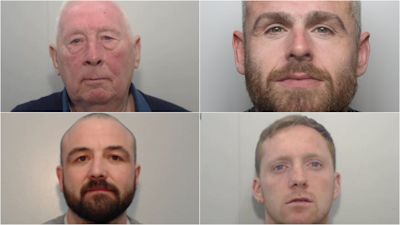
The saga of John Eric Spiby stands as a cautionary tale about how sudden wealth can amplify existing tendencies — for better or worse. In this case, a seemingly ordinary lottery win became the catalyst for an extraordinary descent into organized crime, causing harm far beyond the initial financial gamble.
Instead of becoming a footnote in lottery folklore, Spiby’s story turned into a legal and moral lesson about accountability, choice, and the consequences of illegal enterprise at any age.
