

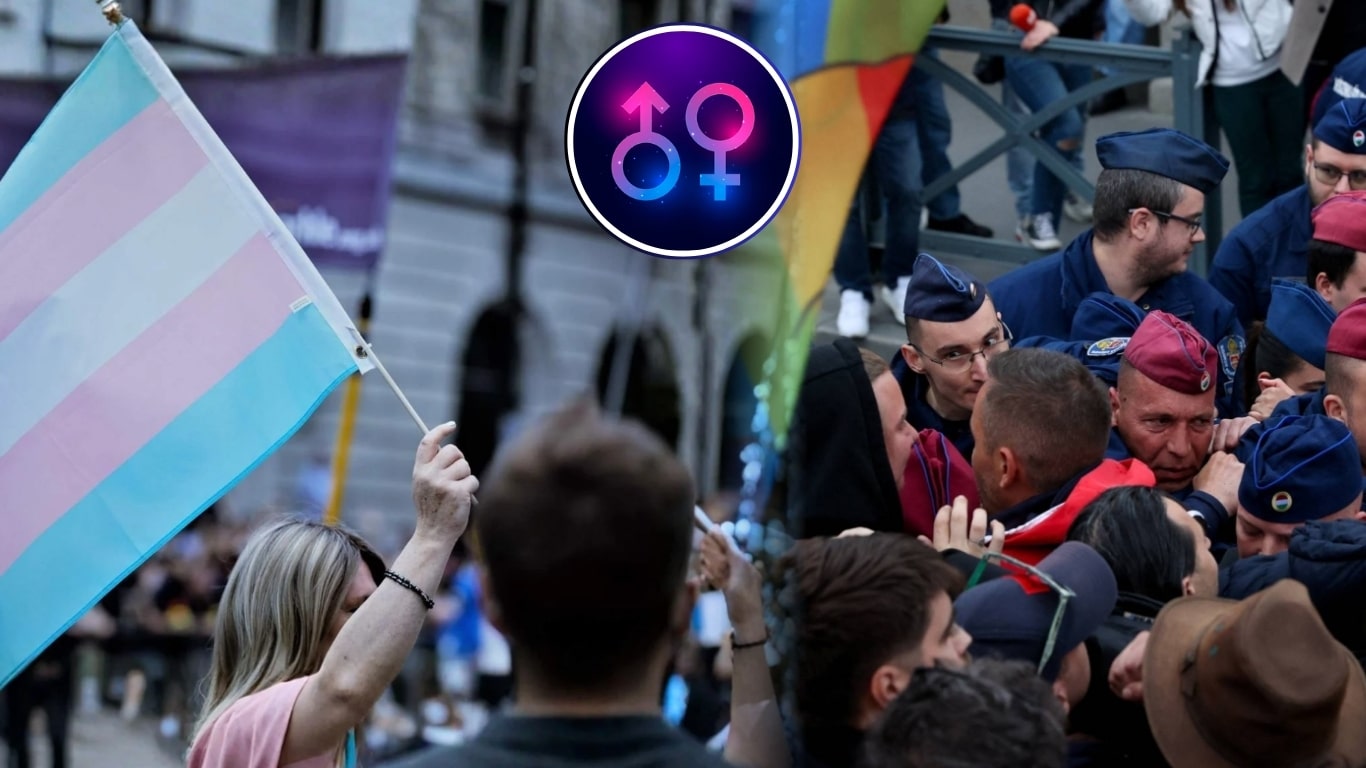
What Exactly Changed in Hungarian Law?

In April 2025, Hungary’s parliament passed a far‑reaching constitutional amendment that, among other changes, specifies in the Fundamental Law that a person is legally recognized solely as a man or a woman — determined at birth based on biological sex characteristics.
This constitutionally entrenched binary definition effectively eliminates the possibility of legal gender recognition for transgender and non‑binary individuals. According to human rights groups, the amendment explicitly prohibits any change of sex on official documents and replaces “gender” in legal contexts with “sex at birth,” meaning that a person’s legal identity is locked to biological characteristics such as chromosomes or genitalia registered at birth.
Although Hungary’s Parliament had already banned legal gender recognition in 2020 — effectively preventing people from changing their legal gender — this constitutional amendment further hardens that position by embedding it into the country’s supreme law.
The Government’s Justification

Hungarian Prime Minister Viktor Orbán and his ruling conservative party, Fidesz–KDNP, defend the amendment as necessary to protect children’s physical, mental, and moral development, asserting that a clear, binary notion of gender is critical for social stability.
Officials argue the change is a way of preserving “traditional values” and defending what they call the natural family structure. Supporters say that the law prevents confusion over biological sex and reinforces societal norms they claim are shared by most citizens.
In parliamentary debates, proponents often frame the amendment as a peaceful correction to modern legal language, one that reflects “common sense” and aligns with Hungary’s civil registry practices.
Why the Law Has Sparked Immediate Controversy
Despite the government’s framing, the amendment has been widely condemned by human rights organization’s, legal experts, LGBTQ+ advocates, and many international observers. Critics argue that this move is not simply a technical definition change — but a direct attack on the existence and dignity of transgender and non‑binary people.
Human Rights Implications

Human rights advocates contend that binding gender identity to biological sex fundamentally undermines the ability of transgender people to have their identities recognized and respected under the law. The amendment, they say, contravenes rulings by international courts — including the European Court of Human Rights (ECtHR), which has recognized legal gender recognition as part of the right to respect for private life.
Because Hungary is a member of the European Union and a party to the European Convention on Human Rights, many legal scholars argue the constitutional change could violate core EU values, such as dignity, freedom, equality, and non‑discrimination.
Global and Regional Backlash
International human rights organization’s, including LGBTQ+ advocacy networks, have condemned the amendment as regressive. Some have called on the European Commission and the Court of Justice of the EU (CJEU) to pursue legal action against Hungary for infringing EU fundamental rights.
The controversy has ripple effects beyond Hungary. EU member states and EU institutions emphasize the bloc’s commitment to protecting human rights, including those of sexual and gender minorities. The Hungarian law highlights a growing divide within the EU between member states pushing progressive equality norms and those prioritizing conservative cultural policies.
Domestic Reactions: Support and Opposition
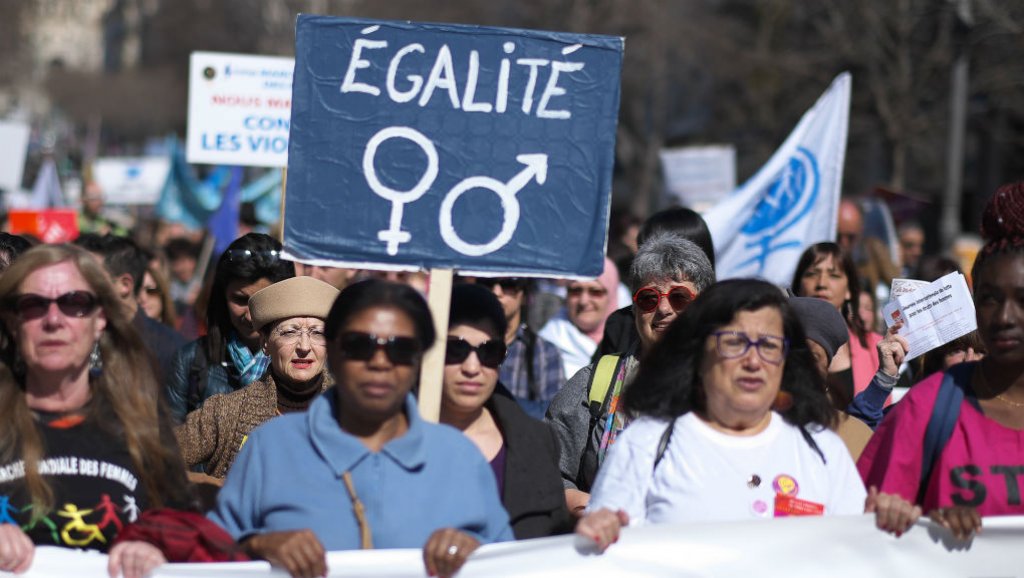
Supporters of the amendment — notably among conservative voters and political allies of Orbán — applaud the law as an affirmation of “traditional values” and national identity. They frame the controversy as an external attack by liberal elites and foreign media seeking to impose cultural norms incompatible with Hungarian society.
The LGBT community and allies have also pointed out that alongside this gender amendment, other laws — such as bans on Pride marches and restrictions on LGBTQ+ content — form an integrated legal framework that suppresses visibility and expression.
What This Means for the Future
Hungary’s constitutional amendment is likely to remain a subject of legal battles and political debate for years to come. Its significance extends beyond administrative procedure — it reflects deeper societal struggles over identity, human rights, and the role of tradition in law.
For many outside Hungary, this law symbolizes the risks of codifying social norms into constitutional text when those norms target vulnerable populations. For Hungarians, it energizes competing visions of national identity and the limits of individual freedom.
One thing is clear: Hungary’s decision to define legal gender strictly as male or female has reshaped not only its own legal landscape but also the international conversation about rights, identity, and the future of inclusive lawmaking.
