

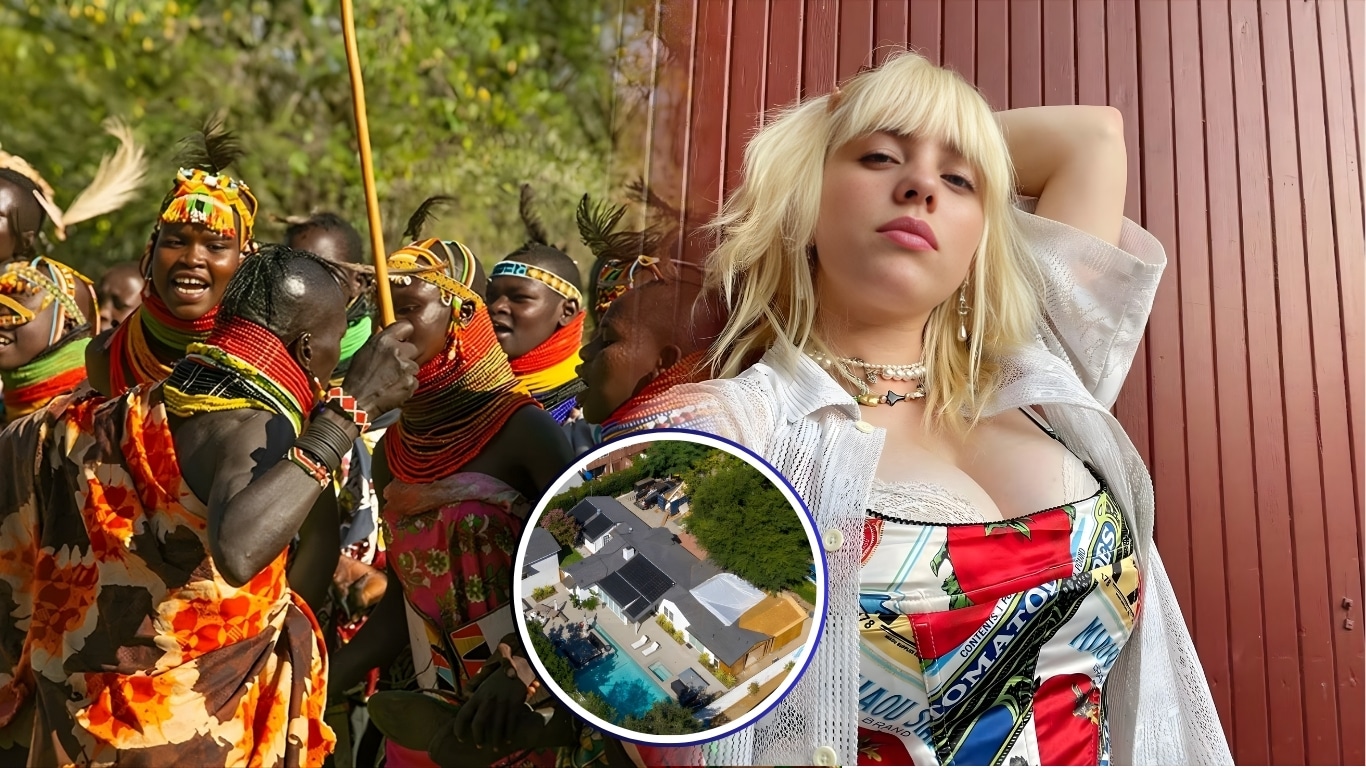
Pop superstar Billie Eilish recently found herself at the center of a cultural conversation that went far beyond music, after using her acceptance speech at the 2026 Grammy Awards to make a political statement about immigration. Her words — particularly that “no one is illegal on stolen land” — sparked both praise and criticism online.
What followed, however, wasn’t just debate about U.S. immigration policy — it became a larger discussion about Indigenous land rights and celebrity responsibility. That’s because Eilish’s Los Angeles mansion is located on land that was historically inhabited by a Native American tribe.
What Billie Eilish Said at the Grammys

At the 68th Grammy Awards, Eilish accepted the Song of the Year award for her hit “Wildflower” and took the opportunity to address what she described as pressing social issues. Among her remarks, she said: “No one is illegal on stolen land.”
The phrase refers to a view widely expressed by activists and historians that much of the United States was formed on land taken from Indigenous peoples during European colonization and expansion.
Why This Became a “News Story”

Following the speech, critics on social media pointed to the fact that Eilish’s own Los Angeles home — reportedly worth about $3 million — sits on land that once belonged to the Tongva people, the Indigenous community native to the greater Los Angeles Basin.
That sparked a wave of commentary online, with some accusing her of hypocrisy for denouncing “stolen land” while owning property on land that was originally Indigenous territory.
What the Tongva Tribe Actually Said
Importantly, actual representatives of the Tongva nation responded publicly to the situation — and their statement was both measured and informative:
-
The Tongva people acknowledged that Eilish’s house stands on ancestral land that historically belongs to their nation.
-
They appreciated her bringing attention to the history of settler colonialism.
-
But they urged that future conversations about “stolen land” include explicit reference to the Gabrieleno‑Tongva Nation, so that the identity and history of the tribe are properly recognized.
-
The tribe noted that Eilish has not personally contacted them about her property.
Their response was not a legal demand, and there is no indication that they own the property today in a legal sense. What they emphasized was visibility and education — ensuring that when public figures talk about Indigenous history, the specific nations and stories are acknowledged.
What the Debate Reflects

The controversy isn’t based on a legal dispute over land rights; rather, it reflects broader public debate about:
-
Indigenous land history and acknowledgment,
-
Celebrity activism and responsibility,
-
Modern property ownership versus ancestral territory, and
-
How issues of colonialism are discussed in mainstream culture.
In other words, the tribe hasn’t filed a lawsuit, nor have they legally reclaimed any property from Eilish. There’s no confirmed legal ownership transfer or legal claim against the property itself.
Public Reaction Has Been Mixed

Responses ranged widely:
-
Some praised Eilish for using her platform to raise awareness about social justice issues.
-
Others questioned whether celebrities should speak on historical injustices while living comfortably on property in wealthy neighborhoods.
-
A few online commentators even joked about hypothetical activist demands — including satirical suggestions like offering to “evict” her — though these ideas were not serious legal actions.
The Tongva Nation Today
The Gabrieleno‑Tongva people are Indigenous to a region covering much of what is now the Los Angeles area and the Southern Channel Islands. They are not federally recognized, which limits their ability to claim ancestral lands under U.S. law — a situation they have been advocating to change.
Their public statement made clear that their priority is education and recognition, not confrontation.
