

Alcoholic beverages can make many of us feel relaxed, sociable, or a bit more confident — but for some people, the most noticeable reaction isn’t how they feel inside… it’s how they look on the outside. One of the most visible reactions many drinkers experience is facial and skin redness shortly after consuming alcohol. But this isn’t just a cosmetic quirk or a sign of “good circulation.” In many cases, it’s a biological alarm bell — and here’s why.
What Causes the Red Flush After Drinking Alcohol?

When you drink alcohol, your body begins a chemical process to break it down. The liver plays the starring role here, using enzymes to metabolize ethanol — the active ingredient in alcohol — into other compounds that the body can eliminate.
Here’s the normal metabolic pathway:
-
Ethanol → Acetaldehyde — First, the enzyme alcohol dehydrogenase (ADH) converts alcohol into acetaldehyde, a highly toxic byproduct that is even more harmful than alcohol itself.
-
Acetaldehyde → Acetate — Next, another enzyme called aldehyde dehydrogenase 2 (ALDH2) converts acetaldehyde into acetate, a harmless substance the body can flush out.
Most people’s bodies manage these steps smoothly. But if something slows down the second step — the breakdown of acetaldehyde — that toxic compound can build up quickly in the bloodstream. And that’s where things go sideways.
The Toxic Build‑Up That Turns You Red
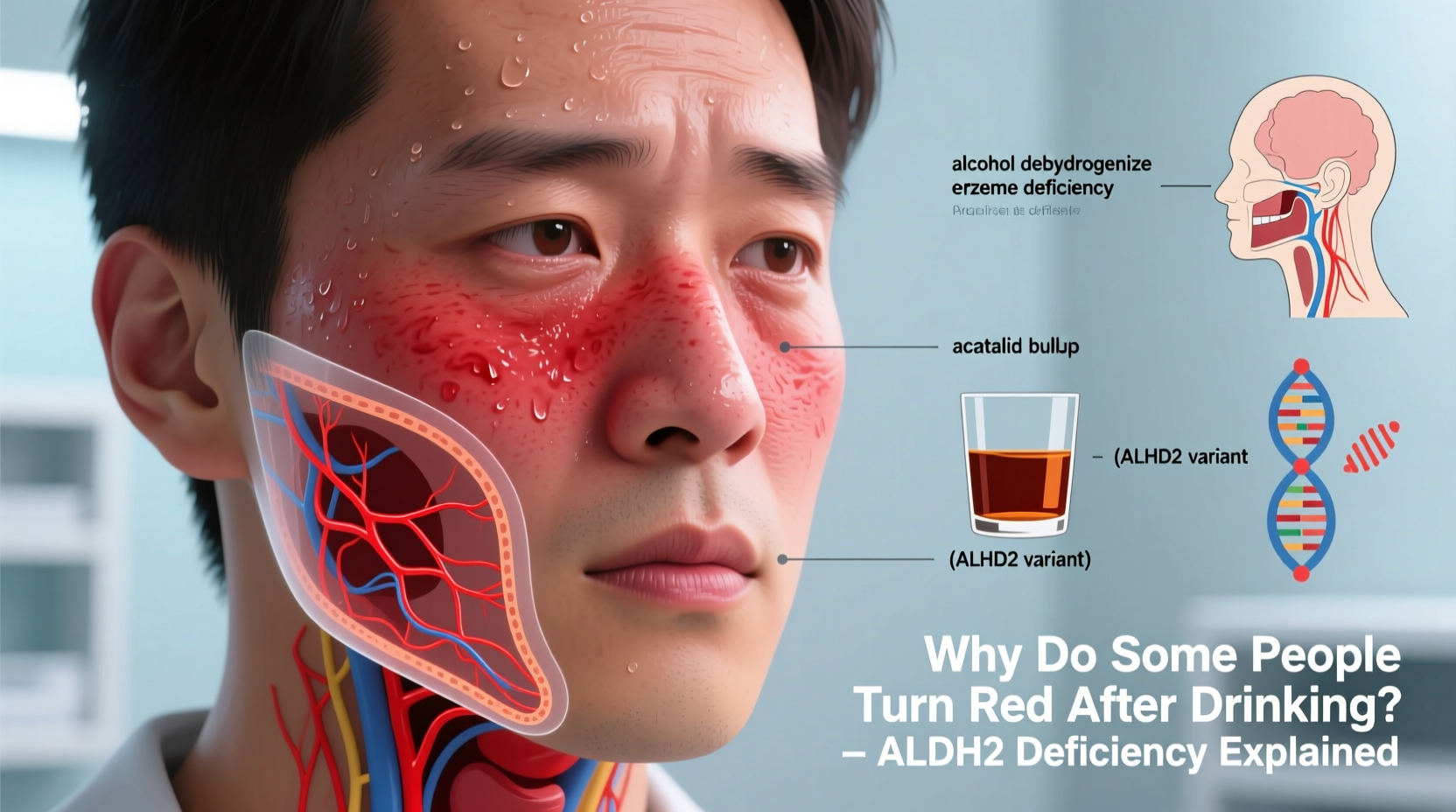
When acetaldehyde accumulates, it doesn’t just sit quietly — it wreaks havoc:
1. Dilated Blood Vessels
Acetaldehyde and alcohol itself cause the small blood vessels under your skin to expand, particularly on the face, neck, and upper chest. This dilation increases blood flow to the surface, producing the familiar red, flushed look — sometimes so intense it resembles a sunburn.
2. Histamine Release
Excess acetaldehyde also triggers the release of histamine — the same chemical that makes your skin itchy or red during allergic reactions — further worsening flushing and warmth.
3. Symptoms Beyond Redness
Clearing acetaldehyde efficiently is essential. When you can’t, other unpleasant symptoms often accompany the red skin, including:
-
Rapid heartbeat (palpitations)
-
Nausea or vomiting
-
Headache and fatigue
-
Low blood pressure
These are all part of what’s known as the alcohol flush reaction or alcohol intolerance.
Why Some People Turn Red and Others Don’t

So why does this reaction hit some people hard, while others sip wine without looking like a beet? The answer is largely genetic.
Many individuals — particularly among East Asian populations — carry a variant of the ALDH2 gene that produces a less active version of the acetaldehyde‑clearing enzyme. This means they can efficiently create acetaldehyde (via ADH), but struggle to break it down. As a result, even small amounts of alcohol lead to significant acetaldehyde buildup — and pronounced flushing.
In fact:
-
Up to 30–45% of East Asians exhibit this flushing reaction due to a defective ALDH2 variant.
-
This is why the reaction has earned names such as “Asian flush,” “Asian glow,” or alcohol flush syndrome.
It’s not just ritualistic terminology — the genetic component explains why this response runs in families and ethnic groups.
Is It Just Cosmetic — or Something More Serious?

Here’s where the “disturbing” part comes in: that red flush is not always harmless.
Health Implications of a Flushing Response
Because acetaldehyde is toxic and classified as a carcinogen, prolonged exposure can cause cellular damage and stress at the tissue level. Studies show that drinkers who experience alcohol flush reactions have a higher risk of certain cancers, particularly esophageal cancer, compared with those who don’t flush.
That means the red flush isn’t merely a silly cosmetic change — it may be an early warning sign of internal stress and damage.
Alcohol Intolerance vs. Allergy
It’s also important to differentiate between alcohol intolerance (a metabolic reaction) and an alcohol allergy (an immune response). Flushing is a hallmark of intolerance — not a true immune allergy — though both can cause red skin.
Can You Prevent Flushing?

There’s no magic cure — because at its core, the flushing reaction is a metabolic limitation — but there are ways to manage symptoms:
-
Drink less or avoid alcohol — the simplest and most effective way to prevent flushing.
-
Hydrate and eat before drinking — can slow alcohol metabolism and reduce spike intensity.
-
Know your triggers — some people with rosacea or sensitive skin respond more strongly to certain drinks like red wine or sugary cocktails.
-
Avoid antihistamines or “quick fixes” marketed online — these may mask the redness but do nothing about the underlying toxic build‑up and can pose risks if they mask warning signs.
Conclusion: Red Skin Is More Than Skin‑Deep
Next time your face turns red after a glass of beer or wine, it’s not just a fleeting blush — it’s your body signaling a breakdown in alcohol metabolism, often tied to genetics. That red flush might be more than embarrassing; it can be a visible sign of internal stress and — in some cases — a predictor of health risks if alcohol consumption continues.
Understanding the science behind alcohol flushing gives you power over your choices — and reminds us that what happens on the outside often reflects something deeper happening inside.
