

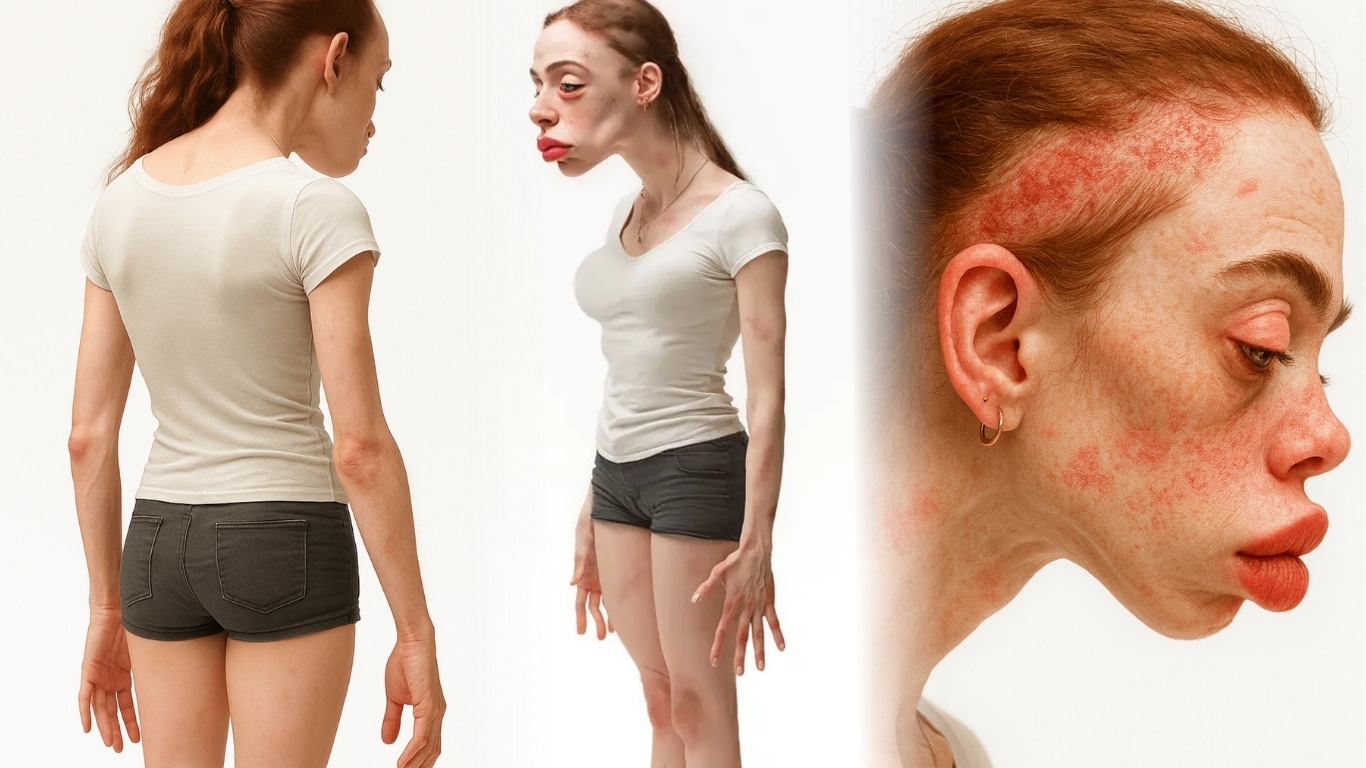
A New Face of Influence: Meet “Ava”

Researchers created “Ava,” a 2050 digital influencer model, to illustrate social media’s potential impact. Unlike today’s polished stars, Ava looks worn, strained, and unsettling.
According to expert interpretations of the model:
-
Hunched posture from prolonged screen use could become the norm, as creators spend hours every day editing, scrolling, and filming content — contributing to chronic neck and spine issues often dubbed text‑neck syndrome.
-
Patchy, irritated skin may develop from constant makeup application, skincare product swapping, and extensive exposure to LED lighting like ring lights. Over time, this could lead to inflammation, pigmentation changes, and visible signs of accelerated “digital ageing.”
-
Dark circles, dry eyes, and blurry vision might replace today’s filter‑enhanced aesthetics as creators endure long editing sessions and relentless screen exposure without adequate rest.
-
Facial distortions such as an overly pointed chin or puffiness from cosmetic overcorrection may also become more common if current beauty trends continue unchecked.
Ava’s unsettling appearance functions as a kind of warning label for the potential physical costs of the influencer pace and lifestyle — an embodiment of what relentless digital engagement could do to the human body over a generation.
📈 From Realism to Exaggeration: Why This Matters

While “Ava” functions as a model rather than a definitive prediction, the physical transformations she embodies are rooted in scientific observations rather than speculative conjecture. For instance:
-
Text‑neck syndrome, a modern musculoskeletal condition linked to prolonged smartphone use, can lead to chronic pain and altered posture if left unchecked.
-
Dermatologists already see increases in conditions like contact dermatitis and skin irritation associated with daily makeup and repeated product changes.
-
Eye strain and vision issues are well‑documented in people who spend significant portions of their day staring at digital screens.
Taken together, these trends suggest that the influencer lifestyle — which often involves long hours, high stress, and constant digital engagement — could produce physical consequences over decades that we’re only beginning to understand.
🤖 Beyond the Human Body: Influence Itself Will Change
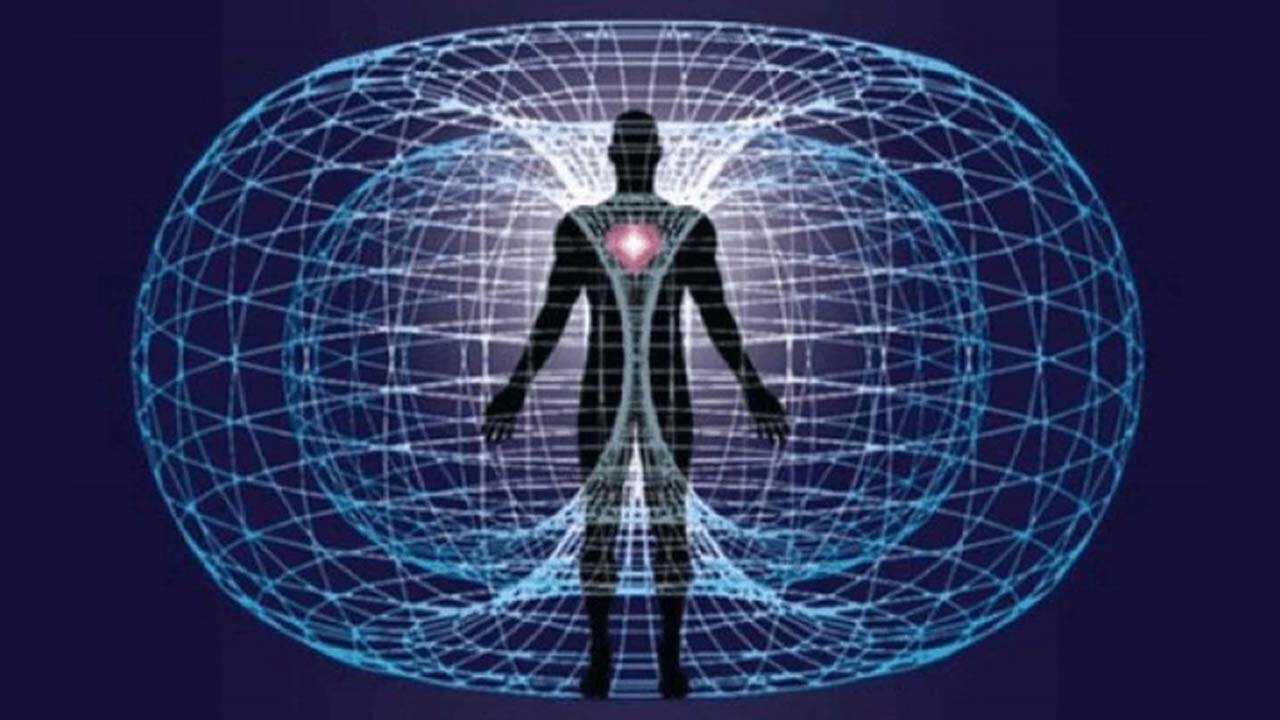
It’s not just physical appearance that experts believe will evolve by 2050. The role of the influencer may change so dramatically that what we think of as “influence” today may be unrecognizable in three decades:
🎭 Rise of Virtual and AI Influencers
Even today, fully virtual influencers — computer‑generated personas with social media followings — exist and earn money through brand partnerships. By 2050, AI models could surpass human creators in influence, reach, reliability, and customization.
Artificial influencers could be programmed to always look “perfect,” never age, and tailor content with millisecond precision, blurring authenticity and automation.
🧠 Hyper‑Personalized Digital Engagement
By mid-century, social platforms could become immersive, AI-controlled environments. Content will adapt in real-time to user emotions, preferences, and biometric data. Influence will be measured by engagement depth, emotional resonance, and personalized experiences, not just likes or followers.
Extreme personalization could make traditional influencer strategies obsolete, as audiences will choose tailored content over mass-produced material.
⚠️ The Psychological Toll of Digital Permanence
Mental health and society are the most concerning aspects of these projections, not physical appearance. Millennia of cultural evolution have shaped human connection through face-to-face interaction. Nevertheless, a future defined by screens, AI personas, and hyper-personalized feeds could induce such alterations.
-
The emotional pressures of maintaining a curated identity could intensify stress, anxiety, and self‑image issues across generations.
-
As AI shapes our perceptions of beauty, relevance, and success, humans may struggle to separate personal worth from digital validation.
-
Real human connection might struggle to compete with AI simulations designed to feel familiar and emotionally responsive.
These aren’t just futuristic risks — they’re ethical questions that researchers, platform designers, and users already grapple with today.
🧠 Looking Ahead: A Call for Awareness
The future of digital life depends on our choices regarding balance, health, and authenticity in online culture, not just technology.
As symbols of society, influencers indicate that screen interactions, content consumption, and relationships will become increasingly significant.
