

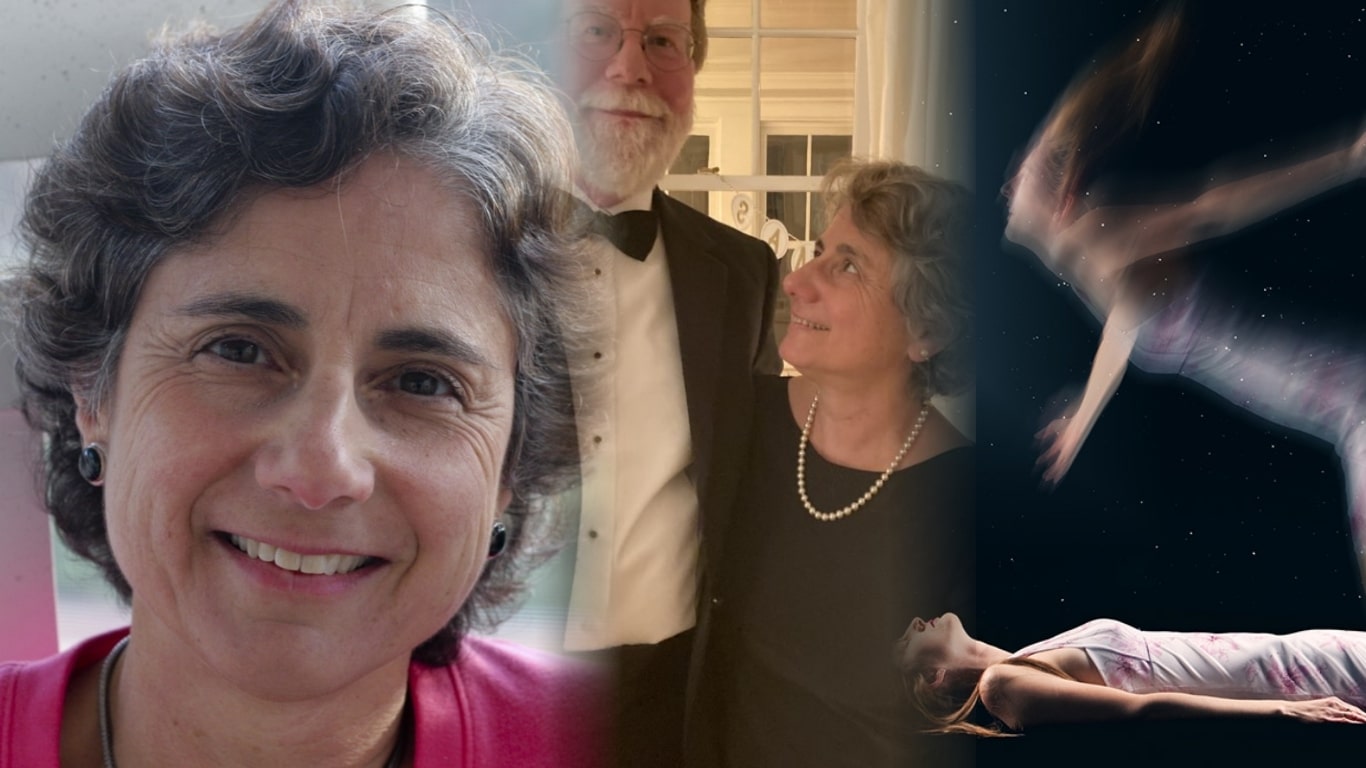
First Brush With Death: A Sudden Out‑of‑Body Experience
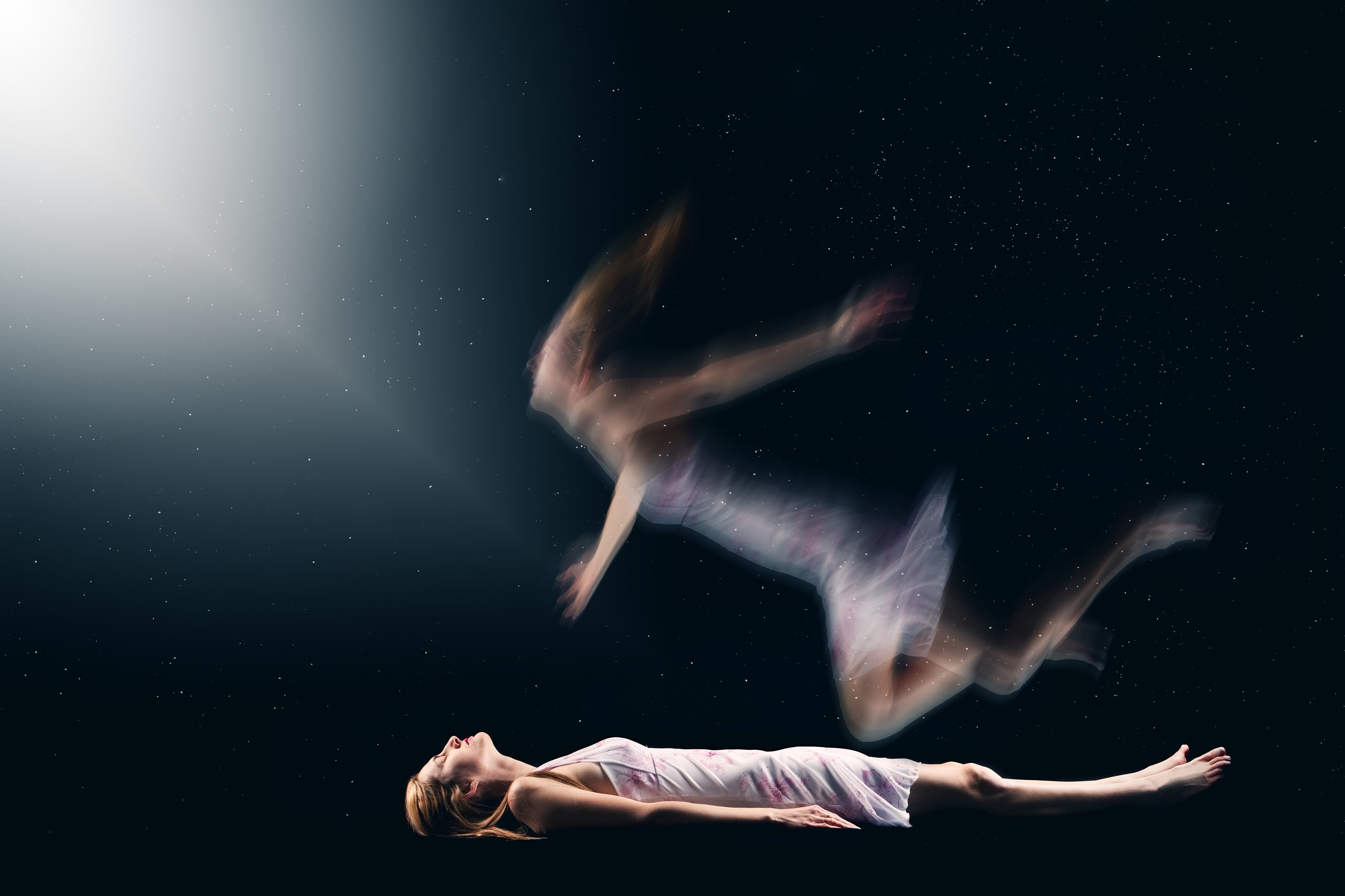
The first life‑altering moment for Prum came decades ago during the birth of her eldest son. She went into premature labor with severe complications — including dangerously high blood pressure, liver issues, low blood cell counts and seizures — prompting doctors to induce a coma to save her life.
During that critical period, Deborah describes an unmistakable out‑of‑body experience:
“All of a sudden, the essence of my being was in the corner of a room, looking down at everything.”
She recalls seeing medical staff working to stabilize her and her newborn child while her physical body lay unconscious on the hospital bed. For Prum, it wasn’t a dream, but a clear perception of her surroundings from a perspective completely detached from her body.
At the time, she struggled to make sense of what she saw — even keeping the experience mostly to herself for years.
⚠️ A Second, More Intense Return
Decades later, on Valentine’s Day in 2007, Deborah and her husband were involved in a devastating car crash. An SUV ran a red light and struck them. In the chaos that followed, paramedics could not detect a pulse — and her husband, a physician himself, repeatedly called out to her as she lay motionless. But Deborah had already journeyed somewhere else.
In her own words, Prum entered:
“A realm where I lost all sense of individuality, transforming into pure energy connected to a greater life force.”
She described this experience as utterly peaceful — unlike anything she’d ever felt in normal life. There was no fear, pain or urgency, only an overwhelming sense of being at home in a glowing, timeless space filled with light.
For Prum, this wasn’t a fragmentary image but a vivid, immersive moment where time seemed to lose meaning entirely.
🧠 What She Says She Saw

Unlike many NDE stories that are brief or fragmented, Deborah’s vision was strikingly cohesive yet deeply peaceful:
🚪 A Complete Loss of Self – Deborah felt her identity dissolve into a unified existence, suggesting a transition beyond physical constraints rather than unconscious hallucination.
🌟 A Yellow, Light‑Filled Realm – She describes being enveloped in a warm, luminous environment — one that felt more ‘real’ and comforting than earthly life.
👨🦱 A Mysterious Man at the Scene – When Deborah eventually came back to her body, she vividly recalls a man with curly hair helping her from the wreckage — though neither her husband nor first responders ever saw him.
Her account blurs the lines between physical rescue and spiritual assistance, a detail that has baffled both believers and skeptics alike.
🔄 Why She Didn’t Want to Return
One of the most striking parts of Deborah’s second NDE isn’t just what she saw — but how reluctantly she returned:
“I felt so guilty about it but I did not want to come back. I mean, I didn’t know where I was but I didn’t want to come back.”
For many people who have near‑death experiences, the transition back to life doesn’t feel like a choice so much as a tug — a force pulling them back to consciousness and their physical body. Deborah’s description aligns with many NDE narratives where individuals report peace or delight beyond the point of return.
🙏 The Impact on Her Life and Beliefs
After surviving these two devastating events, Deborah’s view of life and death shifted dramatically:
💛 No Fear of Death – Once terrified of life ending alone or abruptly, she now feels serenity rather than anxiety at the thought of dying.
✨ More Spiritual, Less Religious – Her experiences didn’t push her toward any specific doctrine — instead, they deepened her sense of spiritual connection and personal meaning.
⏳ A Renewed Appreciation for Life – Understanding the fragility of existence reshaped her priorities, urging her to live more fully and without unnecessary delay.
Her story isn’t simply about miraculous survival; it’s about how close encounters with death can profoundly change how we perceive life’s value.
🧩 What Science Says

While accounts like Deborah’s are emotionally powerful, scientists and medical researchers typically interpret near‑death experiences through neurological mechanisms. When the brain undergoes trauma or oxygen deprivation, areas responsible for consciousness may generate vivid perceptions — including lights, peaceful sensations, and detachment from the body.
Brain activity during cardiac arrest or coma can create experiences that feel spiritual or transcendental, even if they arise from physical processes.
That said, there’s no single scientific explanation that fully accounts for the consistency of themes across different NDE testimonies — from lights and peace to a sense of unity or timelessness.
🌍 A Story That Resonates
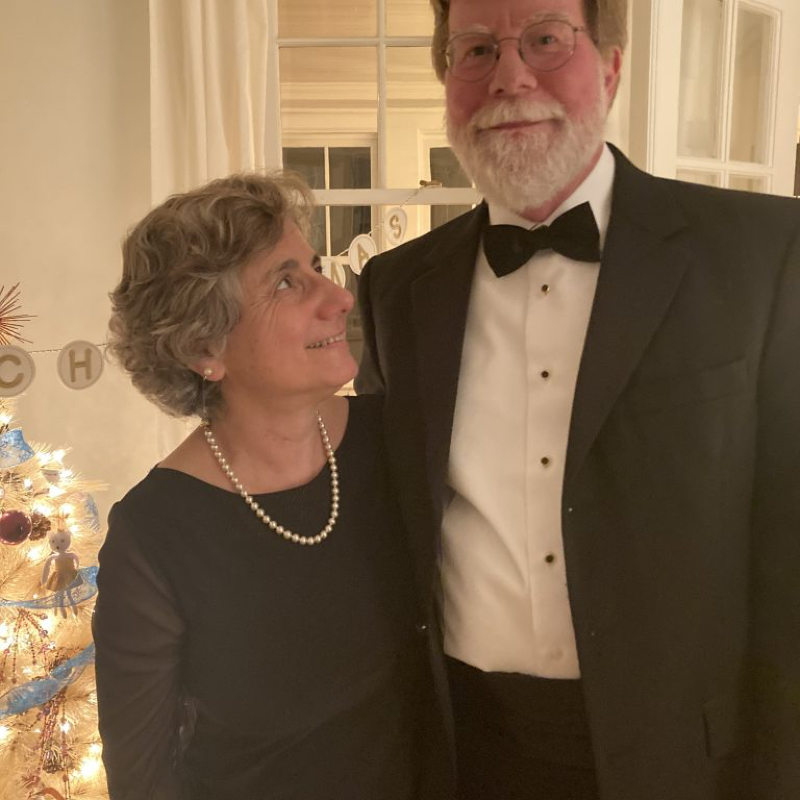
Whether one interprets Deborah Prum’s experiences as spiritually genuine or neurologically inspired, her story taps into a universal question: What happens when we die?
For many readers, her vivid recollections offer comfort, curiosity, and hope. For others, they raise deeper philosophical questions about consciousness, identity, and the boundaries of human experience. Most importantly, her narrative reminds us that life is fragile and precious — and that even the brush with death can bring profound insight.
